
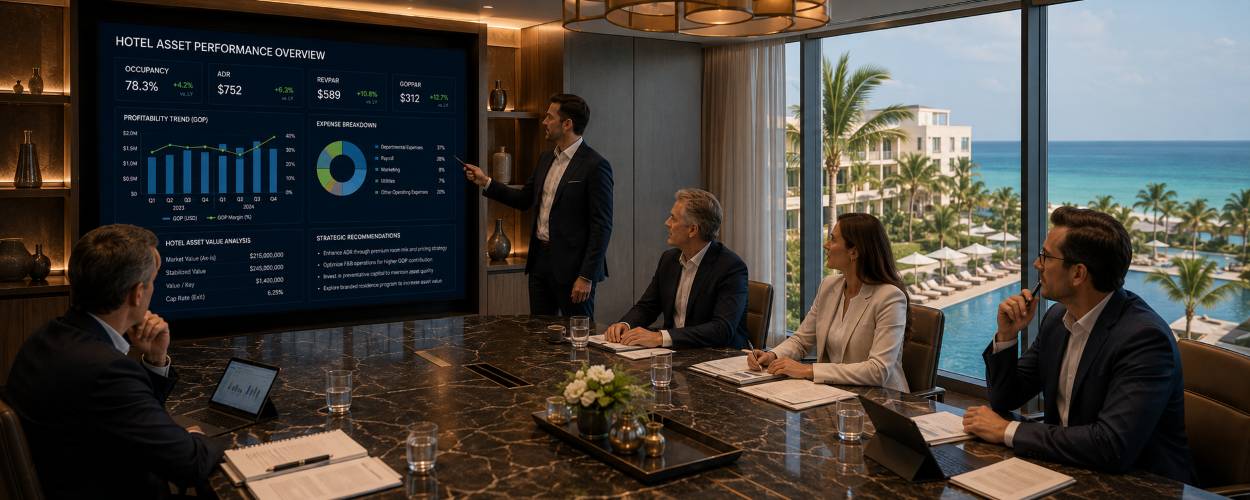
Hotel Asset Management: Strategic Oversight to Maximize Long-Term Hotel Value
Hotel asset management is one of the most important disciplines for ownership groups seeking to protect profitability, improve operational performance, and increase long-term hospitality asset value.
A hotel may have a strong brand, experienced operator, and attractive market position, but without independent asset management oversight, ownership objectives can easily become disconnected from day-to-day hotel operations.
At Boutique Hotel Advisor, hotel asset management is approached as the strategic alignment of operations, capital investment, operator accountability, and ownership objectives — all focused on maximizing long-term hotel value.
What Is Hotel Asset Management?
Hotel asset management is the professional oversight of a hotel asset on behalf of ownership. Its purpose is to ensure that the hotel’s operations, financial performance, capital planning, and strategic positioning consistently support the owner’s investment objectives.
Unlike hotel management, which focuses on daily operations, hotel asset management represents the ownership perspective.
A hotel asset manager evaluates whether the operator, brand, business plan, capital strategy, and market positioning are working together to protect and enhance asset value.
Aligning Hotel Operations with Ownership Objectives
The primary role of hotel asset management is ensuring that hotel operations support the ownership group’s financial and strategic goals.
This includes reviewing:
- Revenue optimization
- Profitability improvement
- Cash flow management
- Long-term asset value creation
- Operator accountability
- Ownership reporting transparency
- Business plan execution
- Investment return expectations

The key strategic question is:
“Is the operator managing the hotel in the best interests of ownership?”
Strong hotel asset management bridges the gap between hotel operations and investor expectations. It helps ownership groups move from passive reporting to active performance oversight.
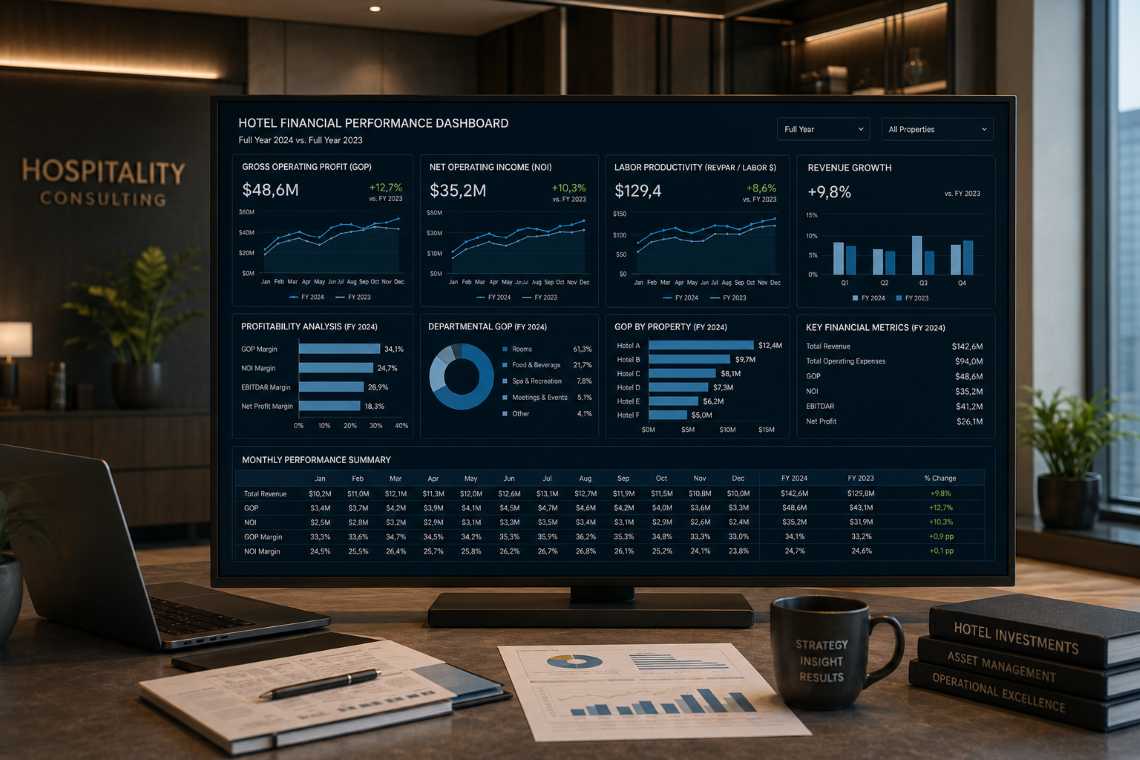
Maximizing GOP and NOI Performance
Effective hotel asset management focuses not only on top-line revenue growth, but also on improving profitability and operational efficiency.
A hotel can increase revenue and still underperform if expenses, labor, departmental costs, or operating controls are not properly managed.
Key areas of review include:
- GOP margin analysis
- Departmental profitability
- Labor productivity
- Flow-through optimization
- Revenue management oversight
- Food and beverage profitability
- Expense benchmarking
- Payroll controls
- Energy and utility management
The critical asset management question is:
“Where are profit opportunities being missed within the operation?”
Hotel asset managers create value by identifying inefficiencies that directly affect ownership returns. This may include improving labor productivity, strengthening revenue management, reducing expense leakage, or challenging operating assumptions presented by the hotel operator.
Capital Planning and Asset Preservation
Hotels are capital-intensive assets. Without disciplined capital planning, even well-performing properties can lose competitiveness, guest satisfaction, and asset value over time.
A professional hotel asset management process should evaluate:
- CapEx planning
- FF&E reserve management
- PIP planning
- Lifecycle replacement schedules
- Renovation prioritization
- ROI-driven capital allocation
- Guestroom modernization
- Technology upgrades
- Long-term physical asset preservation

The strategic question ownership should ask is:
“Which capital investments will create competitive advantage and increased asset value?”
Sophisticated hotel asset management balances asset preservation with strategic reinvestment. The goal is not simply to spend capital, but to allocate capital where it improves guest experience, market position, profitability, and long-term valuation.
Operator and Brand Performance Oversight
Hotel asset management serves as ownership’s independent oversight function over hotel operators, brands, and management companies.
Even strong operators require accountability, performance review, and strategic alignment with ownership objectives.
Key oversight areas include:
- Management agreement compliance
- Brand standard evaluations
- Budget review and approval
- Forecast analysis
- Sales and marketing effectiveness
- Revenue management performance
- Guest satisfaction metrics
- Brand contribution analysis
- Operator incentive alignment
The key question is:
“Is the operator delivering the performance promised to ownership?”
Independent hotel asset management protects ownership interests by improving transparency, strengthening accountability, and ensuring that the operator’s decisions support the owner’s investment strategy.
Long-Term Strategic Positioning of the Hotel Asset
Hotel asset management is not simply operational monitoring. It is long-term strategic positioning.
The strongest hotel assets are proactively repositioned ahead of market shifts, not after performance begins to decline.
Strategic positioning may include:
- Market repositioning
- Boutique or lifestyle hotel enhancements
- Brand conversion opportunities
- Mixed-use activation
- Ancillary revenue development
- Food and beverage repositioning
- Wellness and experiential programming
- Exit strategy preparation
- Asset valuation enhancement

The most important strategic question is:
“How should the hotel evolve to maximize future market relevance and asset value?”
This is especially important in boutique, lifestyle, resort, and independent hotel environments, where guest expectations, design relevance, brand identity, and experiential programming can significantly influence long-term competitiveness.
Why Hotel Asset Management Matters
Hotel ownership requires more than reviewing monthly financial statements. It requires disciplined oversight, operational insight, capital strategy, market awareness, and a clear understanding of how each decision affects long-term asset value.
Professional hotel asset management helps ownership groups:
- Improve profitability
- Strengthen operator accountability
- Protect physical asset condition
- Optimize capital investment
- Improve market positioning
- Increase long-term valuation
- Prepare for refinancing, repositioning, or sale
For hotel owners, investors, family offices, and hospitality ownership groups, asset management provides the strategic structure needed to turn hotel operations into measurable investment performance.
At Boutique Hotel Advisor, hotel asset management is designed to align operations, capital investment, brand performance, and ownership objectives to maximize long-term hotel value.