

Hotel Buyer Due Diligence: The Strategic Framework Behind Smart Hotel Acquisitions
Acquiring a hotel is far more complex than purchasing traditional commercial real estate. Successful hospitality acquisitions require deep operational analysis, financial validation, market intelligence, and a comprehensive understanding of the factors that influence long-term hotel performance.
A professional hotel buyer due diligence process helps investors, ownership groups, developers, private equity firms, and hospitality acquisition teams evaluate risk, identify hidden liabilities, and validate whether a hotel asset can generate sustainable long-term returns.
At Boutique Hotel Advisor, buyer-side hotel due diligence is approached as a strategic investment decision framework — not merely a transactional checklist.
What Is Hotel Buyer Due Diligence?
Hotel buyer due diligence is the comprehensive analysis performed before acquiring a hospitality asset. The purpose is to validate the true operational, financial, physical, and strategic condition of the hotel before ownership transition occurs.
Unlike standard real estate due diligence, hotel acquisition analysis must evaluate:
- Operational performance
- Revenue sustainability
- Brand positioning
- Market competitiveness
- Franchise obligations
- Management agreements
- Deferred maintenance exposure
- Future capital expenditure requirements
- Organizational stability
- Long-term asset value potential
A sophisticated hotel buyer due diligence process helps investors understand not only how the hotel has performed historically, but whether the asset can continue performing successfully under future ownership.
Validate the True Financial Performance of the Hotel
One of the most critical components of hotel buyer due diligence is determining whether the hotel’s reported financial performance accurately reflects sustainable operational reality.
Sophisticated buyers look beyond seller-provided financial statements to identify operational distortions, hidden risks, and temporary revenue conditions that could impact future investment returns.
Key financial due diligence areas include:
- Historical occupancy analysis
- ADR (Average Daily Rate) trends
- RevPAR performance
- GOP and NOI evaluation
- Revenue concentration risks
- OTA dependency exposure
- Group business quality
- Labor cost structure
- Management fee impact
- One-time or artificially inflated revenues
- Deferred operating expenses

A critical investment question must always be addressed:
“Is the hotel’s current financial performance sustainable after acquisition?”
This distinction is extremely important because some hotel assets may appear financially strong during sale negotiations while masking operational weaknesses, unstable demand patterns, or unsustainable cost structures.
Professional buyer-side due diligence helps investors identify the true earning power of the hotel asset.
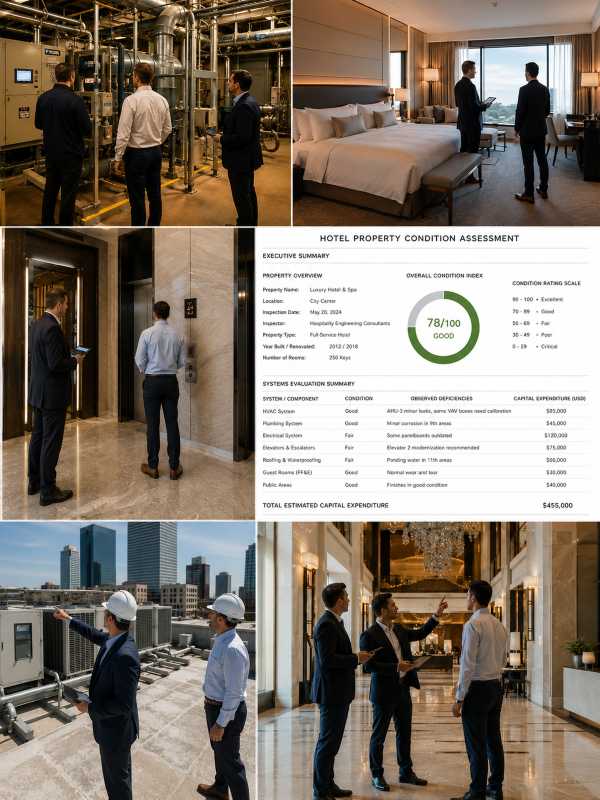
Assess Deferred Maintenance & Future CapEx Exposure
Many hotel acquisitions fail to properly evaluate hidden capital expenditure liabilities.
A hotel may demonstrate strong short-term cash flow while simultaneously carrying significant deferred maintenance exposure that can dramatically affect ownership returns after closing.
Professional hotel buyer due diligence should carefully evaluate:
- Roof systems
- HVAC and chiller systems
- Plumbing infrastructure
- Elevator systems
- Guestroom condition
- Public area wear and tear
- Pool and spa systems
- Life safety systems
- Parking lots and exterior envelope
- FF&E reserve adequacy
One of the most important strategic questions during acquisition analysis is:
“What future capital obligations will ownership inherit after closing?”
Underestimating near-term CapEx requirements is one of the most common mistakes in hospitality acquisitions.
A disciplined due diligence process helps investors forecast future capital needs, negotiate acquisition pricing more effectively, and avoid unexpected post-acquisition financial pressure.

Evaluate Market Positioning & Competitive Sustainability
Strong current performance does not automatically guarantee long-term competitiveness.
Hotel buyers must evaluate whether the asset can maintain or improve its market position over the next five to ten years.
Strategic market due diligence typically includes:
- Competitive set analysis
- New hotel supply pipeline review
- Demand generator evaluation
- Market segmentation analysis
- Brand positioning assessment
- Guest review reputation analysis
- Lifestyle relevance
- Food and beverage competitiveness
- Corporate travel demand trends
- Group and event business trends
A critical strategic investment question is:
“Will this hotel remain competitive over the next 5–10 years?”

Hospitality markets evolve rapidly due to changing traveler behavior, economic conditions, tourism trends, technology, and new competitive supply.
Sophisticated hotel investors analyze not only current performance metrics, but also the long-term durability of the hotel’s positioning within its competitive landscape.
This is especially important in the boutique hotel and lifestyle hospitality sectors, where guest expectations continuously evolve.
Review Brand, Franchise & Management Agreement Risks
Hotel agreements can significantly impact operational flexibility, profitability, and long-term asset value.
Many acquisition risks are hidden within franchise agreements, management contracts, and brand obligations that are often underestimated during transaction analysis.
A professional hotel buyer due diligence process should evaluate:
- Franchise agreement structure
- Remaining term obligations
- PIP (Property Improvement Plan) exposure
- Management agreement termination rights
- Incentive fee structures
- Budget approval rights
- Brand standards compliance
- Change-of-control provisions
- Territorial restrictions
One of the most important strategic questions buyers should ask is:
“Do existing agreements support or restrict future ownership strategy?”
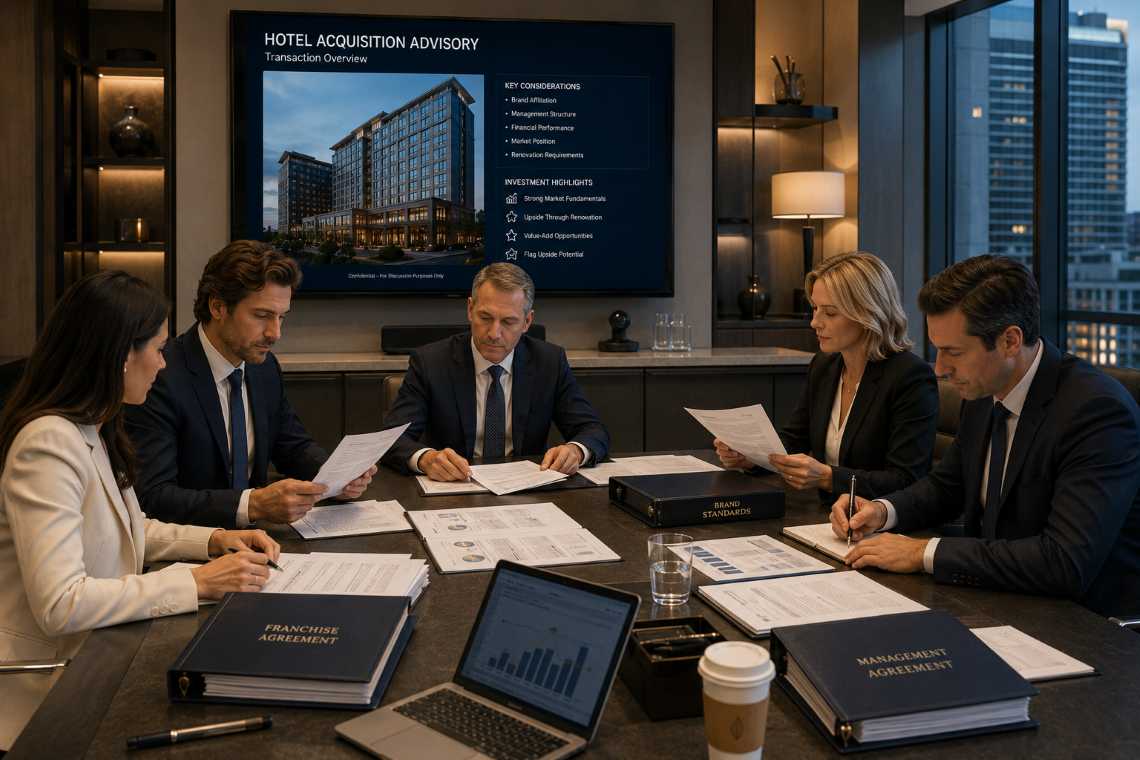
The wrong franchise structure or operator agreement can create operational limitations, excessive financial obligations, or reduced ownership flexibility.
Conversely, the right brand and management strategy can improve market penetration, increase guest loyalty, strengthen operational performance, and enhance long-term asset valuation.
This has become increasingly important within today’s boutique and lifestyle hotel environment.
Analyze Operational & Organizational Stability
The operational structure of a hotel directly impacts guest satisfaction, employee retention, operational efficiency, and financial performance.
Operational instability often becomes visible only after ownership transition occurs — particularly when organizational risks are overlooked during due diligence.
A comprehensive operational review should analyze:
- Leadership team stability
- Employee turnover
- Labor market conditions
- Union exposure
- Service culture consistency
- Guest satisfaction trends
- Operational SOPs
- Technology systems
- Revenue management sophistication
- Sales and marketing effectiveness
One of the most important operational questions is:
“Can the hotel continue performing successfully after ownership transition?”
A hotel’s success is heavily influenced by operational culture, management quality, and organizational continuity.
Strong due diligence helps investors identify operational vulnerabilities before acquisition and develop strategies to preserve performance during transition.
Why Hotel Buyer Due Diligence Matters More Than Ever
The hospitality industry has become increasingly complex due to evolving traveler expectations, rising operational costs, labor challenges, economic volatility, and rapidly changing competitive dynamics.
As a result, hotel acquisitions require far more than a basic financial review.
Investment-grade hotel buyer due diligence combines:
- Financial validation
- Operational analysis
- Market intelligence
- Risk identification
- Strategic positioning analysis
- Asset preservation planning
- Long-term value optimization
The strongest hospitality investors understand that hotel buyer due diligence should function as a strategic investment decision framework — not simply a transactional requirement.
A properly executed due diligence process can significantly reduce acquisition risk, improve negotiation leverage, and protect long-term investment performance.
For hotel investors, developers, family offices, and hospitality acquisition teams seeking independent buyer-side advisory services, Boutique Hotel Advisor provides strategic hotel acquisition due diligence focused on operational clarity, investment protection, and long-term hospitality asset value.